
Biggest challenges for fleets in year ahead named at AFP Conference
The biggest challenges facing the fleet sector in the year ahead were named at the 2026 Annual Conference of the Association of Fleet Professionals (AFP).
The event, held at the British Motor Museum, Gaydon, and sponsored by Ayvens and Farizon, attracted a record audience of more than 300 delegates.
Paul Hollick, AFP chair, said the key subjects for fleet managers were decarbonisation, cost containment, safer fleets, new technology affecting manufacturers and supply chains, mobility, autonomous vehicles and AI.
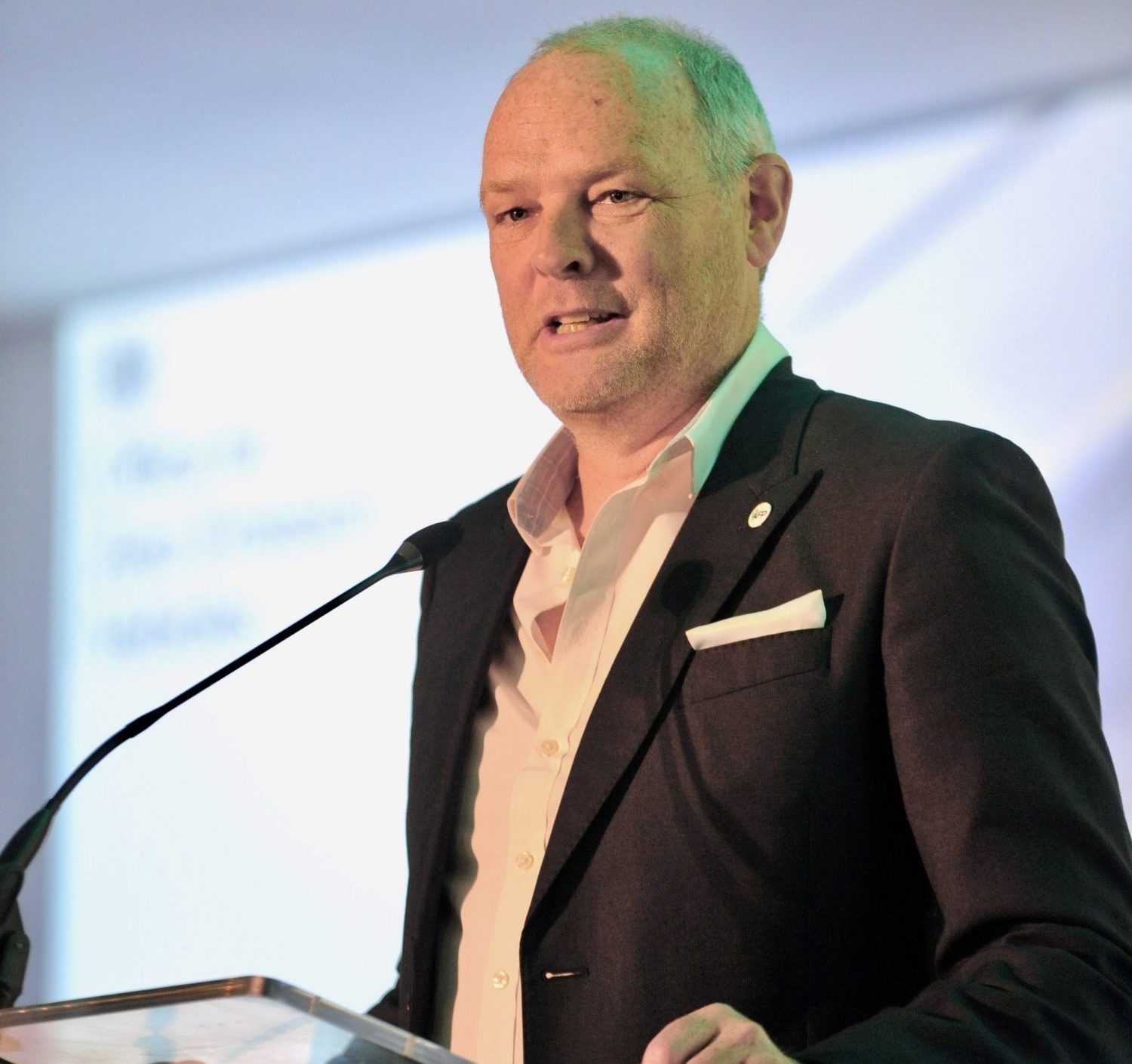
‘These are crucial topics,’ he said. ‘We need to all work to decarbonise through electrification now and not leave it to the next generation. Much progress has been made but there is still more to be done.
‘Costs are always an issue but have come under sharper focus because of the situation in Iran, and almost everyone here today will have been involved in conversations with their finance departments in recent months.
‘AI is an important area and our view is very much that fleet managers who don’t maximise its potential may get left behind, while autonomous vehicles are being tested in the UK for commercial operation later this year and are arriving faster than many anticipate.’
Paul said that AFP membership had risen by 5% in the last year and was now close to 2000 with a target of a further 10% in the year ahead.
‘We continue to work to promote the role of the fleet manager and support our members,’ he explained. ‘Important developments in the last year include the launch of the AFP app, shared charging platform, new courses added to the AFP Fleet Academy, and the creation of a lobbying role, as well as events such as the latest AFP Expo, a wide range of regular webinars and member meetings.’
The importance of the AFP’s committees – covering decarbonisation, mega fleets, risk and compliance, mobility, and diversity and leadership – was also underlined.
Paul said, ‘These forums are important for discussion of current fleet issues, examining solutions and best practice, and disseminating findings across our membership.’
Future plans for the organisation included a concentration on promoting fleet skills, work experience and mentoring – all aimed at attracting people into the sector, he added.
‘We cannot stress how important it is to create interest in fleet as a career,’ said Paul. ‘We are in a situation where many leaders in the industry are heading towards retirement and a generation’s experience will be lost. New people are needed to replenish our talent base.’
The keynote speaker at the conference was Ben Banfield, head of vehicle policy, consumer and strategy at the Office for Zero Emissions Vehicles, covering government policy in the electric vehicle (EV) sector.
AFP board director James Pestell presented on the use of artificial intelligence (AI) in fleet management, looking at its potential in the sector and included a live demonstration.
He said, ‘There is some fear about AI in our industry but the question shouldn’t be whether AI will replace fleet professionals but how it can help them become more effective. It is a matter of looking at what AI can do – it has power to interpret, interrogate and summarise data.
‘Fleets are, of course, not short of data. Generally, we have too much information stored in too many different systems and this is where AI can really make a difference. By building AI literacy and capabilities, it is probable fleet managers can maximise the data they already hold, transforming their approach from reactive to proactive decision making.’
Adam Forshaw, head of communications at the British Vehicle Rental and Leasing Association (BVRLA), presented on the government’s planned Electric Vehicle Excise Duty (eVED) and its potential negative impact on both fleet operators and wider EV adoption.
‘This is the wrong tax at the wrong time,’ he stated. ‘Primarily, it risks removing the momentum that has been built behind the EV market by adding cost and complexity for all buyers. Also, it appears to have been designed with a single driver private owner model in mind. For fleets, the situation is much more difficult thanks to their scale. Working alongside the AFP, we are strongly opposing this and making government aware of the issues eVED would create.’
A new legislation panel discussion featured Dale Eynon, the AFP’s government affairs and policy lead, who also spoke on the issue: ‘eVED would be a huge burden for fleet operators and we are determined to lobby effectively against its introduction in 2028 in its current form. On a practical level, it will act as a very real disincentive for EV adoption and we see this as potentially a defining issue for the future of fleet electrification.’
The AFP Fleet Academy Awards were presented by Ronnie Gillman, training manager of the AFP Fleet Academy. Karla Brown, Anglian Water and Amy Webster, City Electrical Factors, both won in the strategic fleet vehicle management category, while Christian Mullings, SGN Gas, won in the advanced fleet vehicle management category.
Other AFP Fleet Academy students recognised for taking part in the fleet vehicle management strategic course included Mary Barlow, ISS Facility Services; Kyle Bayes, Grosvenor Leasing; Lee Blackmore, the AA; Mark Dawson, Funeral Partners; Beckie Edwards, Severn Trent; Callum Gates, Jungheinrich; Lisa Gough, Severn Trent; Patricia Latham, Openreach; Jennifer Maidment, Intact Insurance; Emma Plested, Holman; Jordan Walsh, National House Building Council; and Amy Webster, City Electrical Factors.
Also, becoming AFP Fellows after completing the fleet vehicle management advanced course were Adina Bostioca, Volkswagen Financial Services; Christian Mullings, SGN Gas; Martin O’Neill, The Hire Service Company; and Tim Sykes, Cheshire Police.