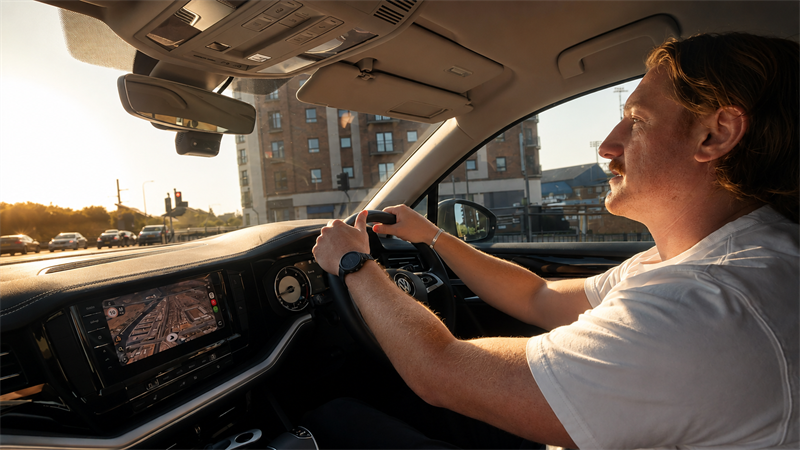
Abax addresses fleet GDPR compliance with privacy by design dash cam
Abax is delivering its Vision AI, an intelligent video telematics solution tailored specifically to navigate complex UK GDPR requirements. To accelerate safe, compliant deployments, the company has introduced a comprehensive initiative providing complimentary professional hardware installation across the UK for all qualifying contracts, removing the primary cost and operational complexity of adoption.
While video telematics provides invaluable protection for fleet assets and driver safety, deployment often introduces regulatory challenges. Installing any in-vehicle camera establishes a business as a ‘data controller’ under UK GDPR, requiring formal legitimate interests assessments (LIAs) and, for high risk processing such as driver facing cameras, mandatory data protection impact assessments (DPIAs).
Abax Vision AI addresses these compliance demands directly. Developed to align closely with Information Commissioner’s Office (ICO) guidelines, the system moves away from continuous cloud recording in favour of a targeted, privacy respecting driver safety system.
While compliance policies are managed on paper and in the cloud, physical installation is where privacy boundaries are established. Incorrectly positioned or poorly calibrated cameras risk capturing excessive non work areas, potentially violating the core GDPR principle of data minimisation.
To resolve this, Abax is offering complimentary professional installation across the UK on all qualifying contracts. By managing the complete physical rollout through its certified technicians, fleet operators can ensure that hardware is correctly calibrated, fields of view are strictly defined, and the system is safely integrated. This initiative removes the primary financial barrier of upfront installation and vehicle downtime, making professional grade, compliant telematics accessible without capital strain.
To ensure robust legal compliance and protect driver privacy, Vision AI incorporates key structural features:
- No continuous cloud surveillance: rather than transmitting constant footage to cloud storage, the system utilises event triggered recording. High definition footage is uploaded and securely archived only when specific safety events occur – such as harsh braking, rapid cornering, or a collision – protecting the privacy of the driver during standard, safe operation.
- Intrusive audio deactivated by default: continuous audio recording in a workplace is considered highly intrusive under UK GDPR and is difficult to justify legally. Consistent with regulatory recommendations, Abax Vision AI keeps audio recording deactivated out of the box, allowing fleets to configure event triggered audio only where there is a documented, proportionate safety requirement.
- Edge native AI for biometric protection: when dual facing cameras are deployed to monitor risky behaviours such as driver fatigue or mobile phone use, sensitive visual features are analysed locally on the device’s processor (at the ‘edge’). No raw biometric profiles are stored in the cloud, minimising the regulatory risks associated with Article 9 UK GDPR processing of sensitive biometric data.
- Unified and secure data control: the solution integrates video evidence directly with telemetry data, driver profiles, and routes on a single, secure Abax platform. This eliminates the vulnerabilities of standalone third party dashcam applications or local SD cards, creating a secure, restricted access audit trail.
Traditional video telematics provides valuable operational data, but deployment often introduces significant concerns regarding driver surveillance,’ said Jack Bell, senior technical project manager. ‘We designed Abax Vision AI to solve both the physical safety of the fleet and the legal compliance of the business. Securing GDPR compliance, setting transparent company policies, and winning driver trust are the real keys to a successful rollout. With edge native processing and strict event triggering, we have developed a tool that actively supports drivers rather than monitors them.’