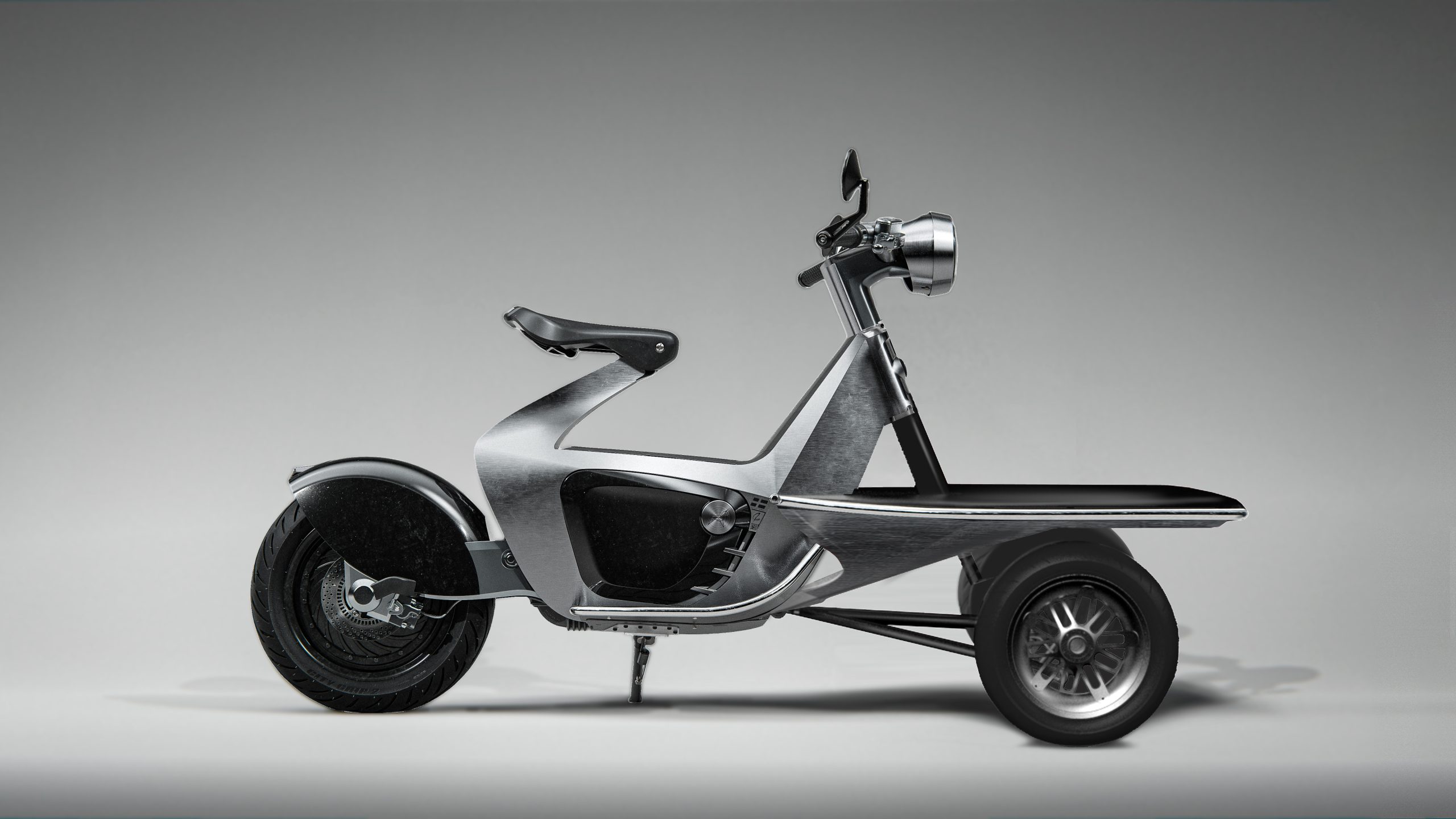
Swedish industrial origami folding and low carbon metals creates greener transportation system
A new transatlantic study shows that the curve folded unibody design is the dominant lever in decarbonising structural metal. By integrating frame, body panels, and cargo bed into a single curve folded structure, Stilfold’s chassis weighs 53% less than the equivalent assembly in an industry leading Asian cargo bike platform – and embodies approximately 50% less carbon, despite upgrading from carbon steel to stainless. The same playbook points to multipliers above 20 times when scaled to truck and automotive structures.
At the cargo bike scale, the attribution is clear. The company’s curve folded unibody chassis weighs 15.5 kg and integrates three categories of components — structural frame, body panels and fairings, and cargo bed — that together total approximately 33 kg of mixed metal and plastic in a Chinese cargo bike platform. Cradle to gate, the footprint falls from approximately 83 kg CO₂ to approximately 42 kg CO₂. A ~50% reduction — achieved by integrating multiple component categories into a single structure, while upgrading to a more durable, corrosion resistant alloy that requires no protective coatings and is fully recyclable at end of life.
The study, conducted under the Twinshift research project with funding from Vinnova, Sweden’s innovation agency, through the Future Mobility programme, is led by Stilfold, the Swedish design technology company pioneering software defined manufacturing, in partnership with California Metals. It combines cradle to gate carbon analysis across material and region combinations with digital twin simulations of the Stilride cargo bike chassis, drawing on independent lifecycle assessment data. The findings reframe the decarbonisation debate for structural metal: design, not sourcing alone, is the dominant carbon lever.
Most industrial decarbonisation strategies cut carbon by switching to lower carbon materials or greener supply chains. The Twinshift study shows what happens when the strategy inverts: integrate multiple component categories into a single unibody structure, then use less of a higher grade material to build it. Sourcing and material choice compound the effect further.
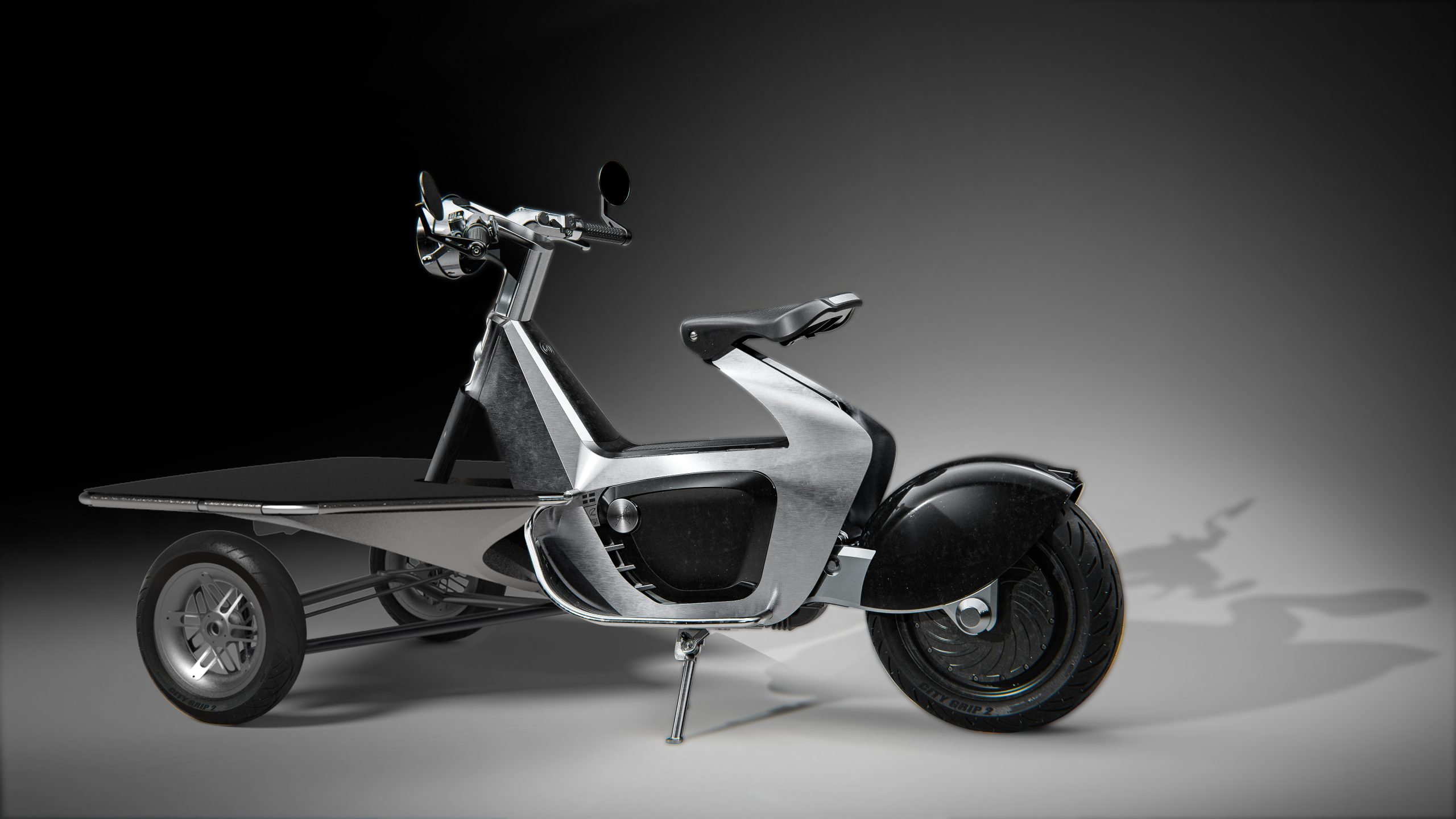
Lever one: curve folded geometry – the dominant carbon lever. Stilfold’s computational design and curve folded forming integrate three component categories – structural frame, body panels, and cargo bed – into a single unibody structure, 53% lighter than the equivalent assembly in an industry leading Chinese cargo bike platform. This single lever does most of the work behind the headline carbon reduction: reducing mass and eliminating plastic body components is more powerful than improving the carbon intensity of any single material.
Lever two: responsible material choice — durability and sourcing. The company deliberately upgrades from carbon steel to stainless steel 304L: approximately twice the embodied carbon per kilogram, but corrosion resistant, coating free, longer lived in service, and fully recyclable. Sourcing from European mills with high recycled content (2.7 kg CO₂e/kg) keeps the upgrade carbon competitive. Across nine material and region combinations analysed in the study, EU sourced Outokumpu Circle Green stainless 304L delivered the best balance of structural performance, durability, and embodied carbon for this application.
Lever three: a flexible, tooling free process – the industrial enabler. Stilfold’s patented robotic curve folding does not appear in the cradle to gate carbon figure directly – but it is what makes the geometry savings physically achievable at industrial scale. Where conventional stamping requires die sets costing up to $5 million per geometry and multi-step forming lines, curve folding replaces all of this with a single continuous bending operation from flat sheet, consuming approximately 12 kWh per chassis. Without this process, the unibody integration and 53% mass reduction that drive most of the carbon saving would not be manufacturable.
The maths behind the multiplier is well established in heavy transport lifecycle analysis. Industry benchmarks for passenger vehicles place lifetime operational savings at roughly six to eight percent energy reduction per 10% mass reduction. For a heavy duty truck travelling a million kilometres over its life, every kilogram removed from the chassis can save 20 to 30 kg of CO₂ in operation alone – a multiplier of more than 20 times on the manufacturing saving. Secondary mass effects compound this further: lighter chassis enable smaller batteries, lighter drivetrains, and lighter supporting structures.
‘The cargo bike proves the principle. The real climate impact appears when the same design logic is applied to larger structures in trucks, cars, and industrial systems,’ said Jonas Nyvang, CEO, Stilfold.
Underpinning the playbook is the company’s digital twin framework, which integrates California Metals’ advanced lifecycle databases for high performance metals with Stilfold’s computational design and manufacturing technology. The framework provides full lifecycle visibility – from raw material sourcing to final product – giving manufacturers precise insight into carbon footprints, energy consumption, recyclability, and structural performance. The project achieved 90% alignment between digital twin predictions and physical material tests, compared with typical current industry levels of around 60 to 70%.
‘The industry has spent years focusing on greener alloys, but the real opportunity lies in combining responsible material sourcing with smarter structural design. By integrating detailed lifecycle data into a digital twin environment, Twinshift enables manufacturers to see exactly where carbon is created — and where it can be eliminated,’ explained Michael Resl, CEO, California Metals.
The project is working toward full traceability of material flows and CO₂ footprint from raw material extraction to recycling, linking key parameters including material weight, energy consumption, recyclability, and structural integrity.