Amazon announces new robotics
Amazon has announced a series of investments and innovations designed to support employee upskilling, speed up deliveries internationally, modernise and expand its European operations network, create more jobs across the region, and introduce cutting edge new robotics.
The announcements includes a more than €10 billion commitment to expand and upgrade fulfilment centres in Europe with next generation robotics.
The investment reflect Amazon’s broader push to use AI and robotics to support its workforce by taking on repetitive and physically demanding tasks so employees can focus on higher skilled roles while customers get their orders faster.
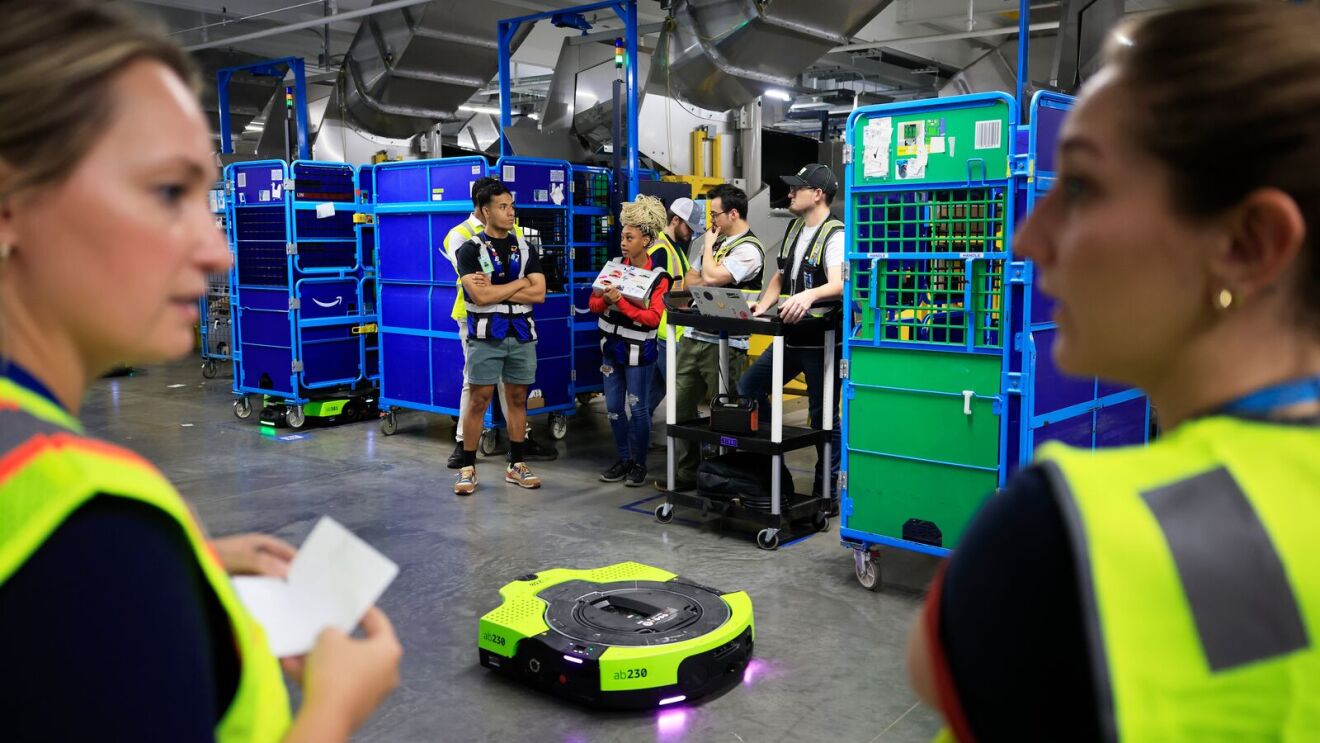
The next generation of Amazon’s autonomous Proteus robot can now operate anywhere items need to be moved across sites – not just in dock areas. Using advances in AI, employees can now direct Proteus with plain, conversational text based prompts without the need for technical commands or programming interfaces. An employee tells it what needs to be done, and the robot figures out the priority, the route, and the timing.
Like its predecessor, the new Proteus is designed to take on physically demanding tasks, moving heavy carts and covering long distances. This means employees can focus on work like managing inventory flow and ensuring quality control across the fulfilment network. It is currently being piloted in Amazon’s labs, with deployment in Europe planned for the first half of 2027.
Amazon will modernise fulfilment centres across Europe, expanding its robotics capabilities to support employees and improve operations. The investment includes the expansion of Vulcan, Amazon’s first robot with a sense of touch, and Stark, a new robotic system that works alongside employees to pick full totes from conveyors and place them on carts. Amazon plans to expand Stark, which was first piloted in Barcelona, Spain, to 15 sites across Europe by 2027.
As part of this investment, the company plans to grow its European fulfilment centre workforce by 25,000 over the coming years, creating more new jobs across the region and investing in the long term careers of operations employees.